Cannabutter is cannabis-infused butter made by binding decarboxylated cannabis flower to fat through a slow stovetop infusion. It is a common base ingredient used in homemade edibles such as brownies and cookies, and can be made at home using a few standard kitchen tools.
What Is Cannabutter?
Cannabutter is butter (or a fat substitute such as coconut oil or olive oil) that has been infused with cannabis. The process involves two main steps: decarboxylation, which activates the cannabinoids in raw cannabis flower, followed by a slow fat infusion that binds those cannabinoids to the butter.
Decarboxylation is the process of applying controlled heat to raw herbs to activate their compounds.
The result is a versatile, cannabis-infused ingredient that can substitute for regular butter in a wide range of recipes.
What You’ll Need
For Decarboxylation:
- ½ oz cannabis flower
- Parchment paper
- Glass baking dish or sheet pan
- Hand grinder or scissors
For the Butter Infusion:
- 1½ cups water
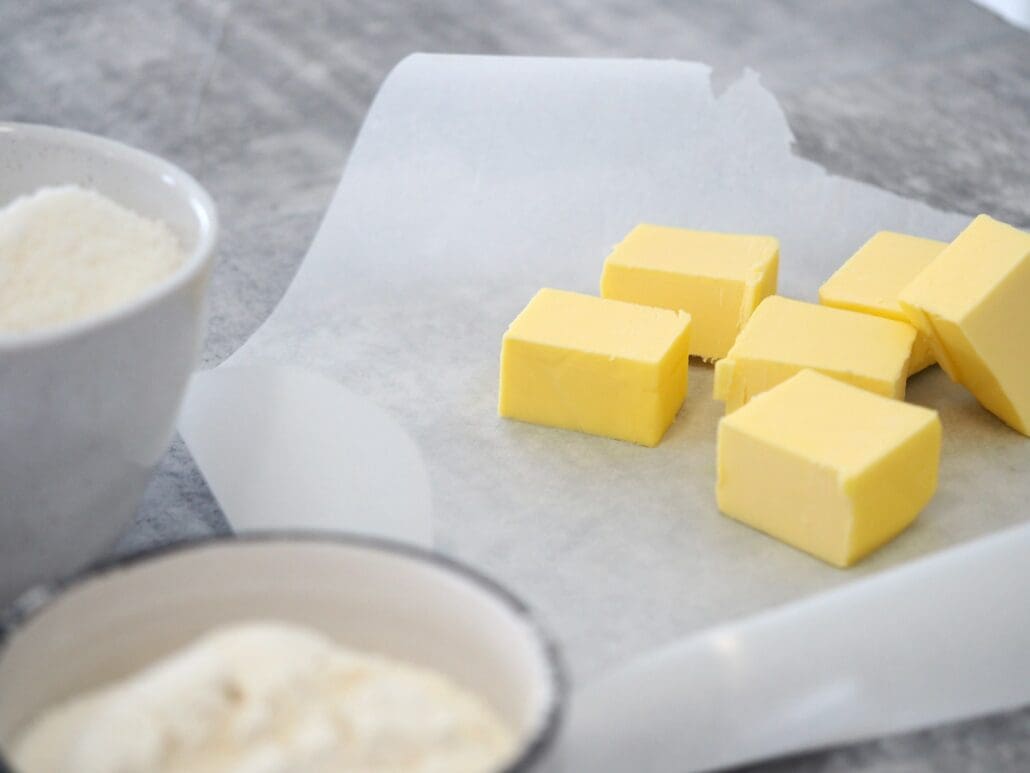
- 8 oz unsalted butter, clarified butter, or oil of choice
- ½ oz decarboxylated cannabis
- Medium saucepan
- Wooden spoon
- Kitchen thermometer
- Cheesecloth and/or mesh strainer
- Airtight storage container (e.g., mason jar)
Step 1: How to Decarboxylate Cannabis
Decarboxylation is a required first step before making cannabutter. Raw cannabis flower contains THCA and CBDA—inactive cannabinoid forms. Applying low heat converts these into their active counterparts, THC and CBD, and allows them to bind effectively with fat during infusion.
- Preheat your oven to 220°F.
- Break the cannabis buds into large pieces by hand and spread them evenly on a parchment-lined baking sheet. Do not grind the flower at this stage—finely ground cannabis may pass through your cheesecloth during the infusion step.
- Bake for 20 minutes if using older or lower-potency flower; 45 minutes for cured, higher-grade flower; or 1 hour or more for freshly harvested, still-wet cannabis.
- Check the oven every 10 minutes and gently turn the flower. The cannabis is ready when its color shifts from bright green to a deep brownish-green.
- Remove from the oven and let it cool completely. Once cooled, use a hand grinder or scissors to break the decarbed flower into a coarse, even consistency—fine enough to handle, but not so fine that it passes through cheesecloth.
Step 2: How to Make Cannabutter on the Stovetop
The stovetop infusion method involves simmering decarboxylated cannabis with water and butter on very low heat for approximately four hours. Adding water prevents scorching without requiring a double boiler. A longer simmer results in a more potent infusion; four hours produces moderate potency with a grassy but manageable flavor profile.
- In a medium saucepan over very low heat, combine water and butter (or oil).
- Once the butter has melted, add the ground decarboxylated cannabis and stir well with a wooden spoon. Cover with a lid.
- Simmer on the lowest heat setting for 4 hours, stirring every 30 minutes. Use a kitchen thermometer to monitor the temperature—do not allow it to exceed 180°F.
- After 4 hours, strain the mixture through cheesecloth or a mesh strainer into a clean, airtight container. Discard the plant material.
- Allow the strained butter to cool to room temperature before sealing. Store in the refrigerator for up to six months, or freeze for extended storage.
Note: The infusion process will produce a strong cannabis odor due to terpenes—the aromatic compounds naturally present in cannabis flower. Ensure your preparation space is well-ventilated.
How to Use Cannabutter in Recipes
Cannabutter can substitute for regular butter in most baked goods and some savory applications. According to Bon Appétit’s guide The Art of Weed Butter by Mennlay Golokeh Aggrey, this recipe produces approximately 30 mg of THC per tablespoon using the proportions listed above.
For reference on portioning by recipe yield:
- A batch yielding 12 brownies would use approximately 4 tablespoons (¼ cup) of cannabutter total—roughly 1 teaspoon per serving at this potency level
- For savory applications, consider combining 1 tablespoon of cannabis-infused oil with 3 tablespoons of regular oil to reduce per-serving cannabinoid concentration
These figures are estimates based on starting material and infusion time. Actual THC content will vary depending on the potency of the cannabis flower used. Refer to your product’s certificate of analysis (COA) for accurate cannabinoid data.
Washington State Notice: Cannabis products are legal for adults 21 and over in Washington State. Homemade edibles are for personal use only and may not be sold or distributed. For Washington State cannabis regulations, visit the Washington State Liquor and Cannabis Board (WSLCB).
Frequently Asked Questions
Q: Can I use any type of butter or fat to make cannabutter?
A: Yes. Cannabutter can be made with unsalted butter, clarified butter (ghee), coconut oil, olive oil, or sesame oil. The infusion process is the same regardless of fat type. Unsalted butter is recommended when the final product will be used in recipes where salt content needs to be controlled.
Q: How should cannabutter be stored, and how long does it last?
A: Store finished cannabutter in a sealed, airtight container in the refrigerator for up to six months. It can also be frozen for longer storage. Label the container clearly to prevent accidental consumption.
Q: Does cannabutter look or smell different from regular butter?
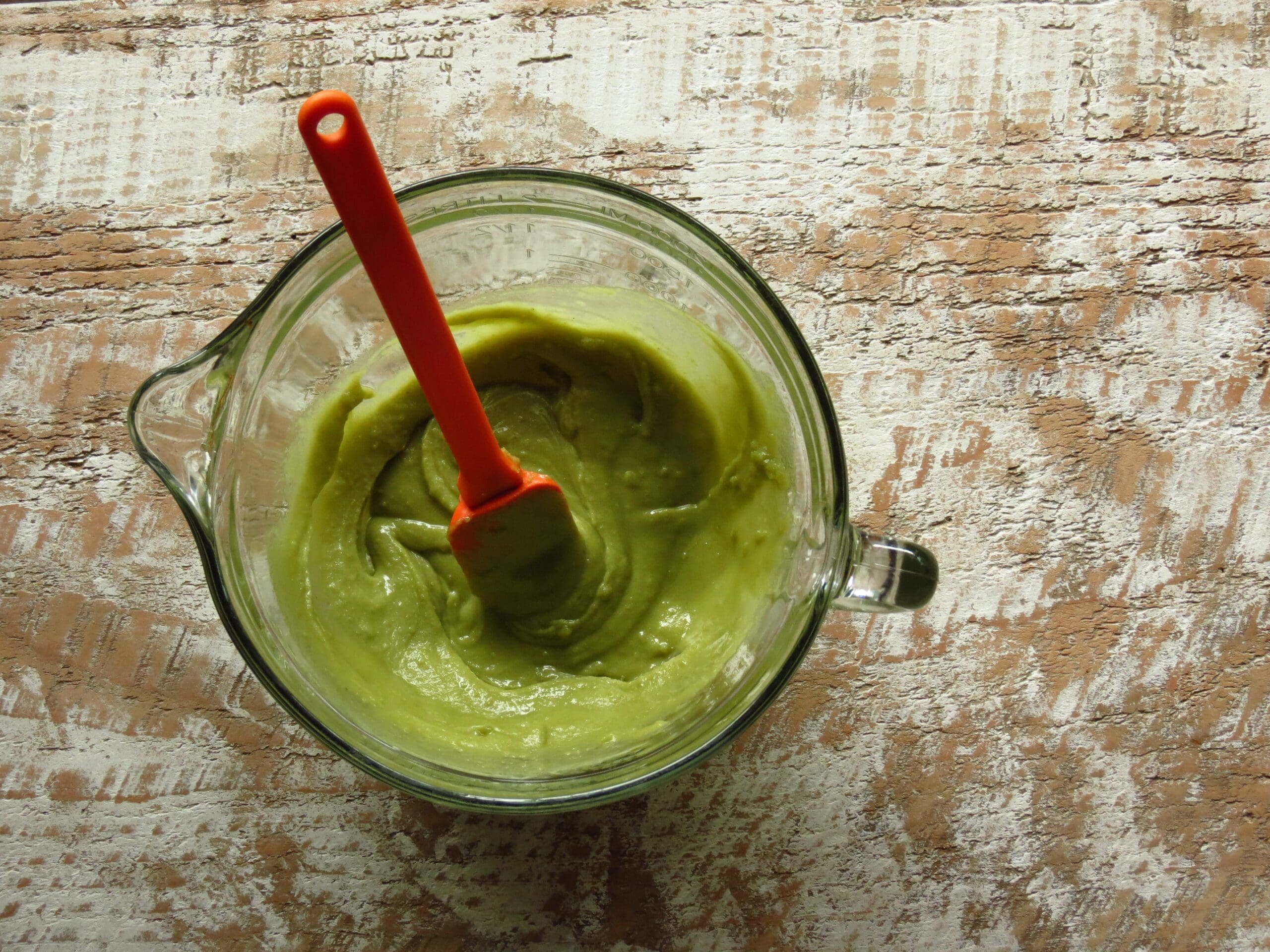
A: Yes. Cannabutter typically has a green-brown tint and a distinct herbal aroma due to the chlorophyll and terpenes from the cannabis flower. The intensity of color and smell will vary based on the amount and quality of flower used.
Your cannabutter can be stored in an airtight container in the refrigerator for several weeks or in the freezer for up to six months.
For adults 21 and older only. Cannabis affects individuals differently. Always consult product labeling and applicable Washington State regulations before preparing or consuming cannabis-infused products. Do not operate a vehicle or heavy machinery after consuming cannabis. Keep all cannabis products away from children and pets.
Featured image by Correen